


Overcoming the Stigma of Mental Healthcare: A 2026 Community Guide

In 2026, 74% of Americans believe that society still discourages people from seeking help for their mental well-being. It's a heavy burden to carry. You may feel that admitting you need support is a sign of weakness, or perhaps you fear the judgment of your family and peers. We understand that the path to wellness often feels blocked by these invisible walls. You aren't alone in feeling that therapy is a mysterious or daunting process. Identifying misconceptions. Challenging biases. Reclaiming wellness.
This guide is your roadmap for overcoming the stigma of mental healthcare so you can access the support you deserve. We believe your mental health is a vital pillar of your overall physical health. Your worth is inherent. Your journey is valid. Grounded in our commitment to inclusive Care, we will preview the steps to dismantle these barriers, explain what modern behavioral health services actually look like, and show you how to talk to others about your journey with confidence.
Key Takeaways
Identify the hidden social and internal barriers that often stand between you and the compassionate healthcare you deserve.
Challenge outdated myths and media-driven stereotypes to reclaim your narrative and recognize that seeking behavioral health services is a sign of resilience.
Master practical, community-centered steps for overcoming the stigma of mental healthcare while building a supportive circle of non-judgmental peers.
Explore how integrated care models normalize wellness by treating the whole person, mind, body, and spirit, within a single, supportive environment.
Table of Contents
Understanding the Silent Barrier: What is Mental Health Stigma?
Identifying barriers. Challenging bias. Reclaiming wellness. Stigma is more than a social discomfort; it is a structural hurdle. It acts as an invisible wall between a person and the life-saving healthcare they deserve. When we talk about Understanding Mental Health Stigma, we are looking at a complex mix of external judgment and internal shame. For many in our Charlotte community, the fear of being labeled is often more daunting than the symptoms themselves. This fear stops people from walking through our doors for professional medical evaluations. It turns a manageable health condition into a silent struggle that persists in the shadows.
A 2026 report shows that 74% of Americans believe society still discourages people from seeking help. This discrimination often grows in the soil of misunderstanding. When people don't understand the biological realities of behavioral health, they fall back on fear-based stereotypes. This leads to health disparities that disproportionately affect our neighbors in underserved areas. We see it every day. A person avoids care because they don't want to be perceived as weak. A family hides a struggle because of cultural expectations. Breaking this cycle is the first step toward overcoming the stigma of mental healthcare. It requires us to view wellness as a collective responsibility rather than an individual burden.
The Consequences of Silence
Staying silent has a high cost. When treatment is delayed, minor challenges can evolve into chronic or acute conditions that are much harder to manage. For marginalized populations, this silence often leads to deep-seated internalized shame. It erodes self-esteem. It limits potential. It creates a ripple effect that touches family members, friends, and entire community support systems. Healing the individual strengthens the collective. We believe that every person deserves access to high-quality Care without the weight of judgment.
Why Language Matters in 2026
The words we use can either build walls or open doors. In 2026, we are intentionally shifting our vocabulary to be more inclusive and accurate. We prefer terms like "behavioral health services" or "mental health conditions" over "mental illness." This isn't just about being polite. It's about clinical accuracy and humanitarian respect. Reclaiming your narrative. Owning your journey. Seeking your wellness. By using punchy, action-oriented language, we empower you to see yourself as a person seeking growth, not a diagnosis to be feared. This linguistic shift is a core part of overcoming the stigma of mental healthcare in our modern world.
Myth vs. Reality: Debunking Common Misconceptions
Misconceptions are the shadows that keep people from wellness. One of the most persistent myths is that behavioral health needs indicate a personal failure. In reality, modern science shows us that these conditions are often rooted in genetics, life experiences, and brain chemistry. Media-driven stereotypes often portray people seeking care as unstable; however, the lived experiences of millions show that therapy is a tool for the resilient. The common objection of "I should be strong enough to handle this on my own" is a barrier we must dismantle. True strength is recognizing when you need a partner in your health journey. Success rates for modern counseling are high, and overcoming the stigma of mental healthcare begins with accepting that seeking support is an act of courage.
Challenging myths. Reclaiming truth. Empowering communities. When we look at the data from 2026, we see that 85% of Millennials and Gen Z already view these services as a basic necessity. They understand that a health challenge is not a character flaw. By replacing fear with evidence-based facts, we lower the barriers for everyone in our Charlotte community. If you are feeling overwhelmed, you might find it helpful to explore our behavioral health services to see how professional support fits into a healthy lifestyle.
Myth: Mental Health is Separate from Physical Health
The brain is an organ, just like the heart or lungs. Stress and trauma don't just stay in your mind; they manifest as physical symptoms like chronic pain, digestive issues, and cardiovascular strain. Understanding the link between Stigma, Prejudice and Discrimination and physical outcomes is essential for long-term wellness. Your Primary Care provider is a vital partner in this. By integrating behavioral health with physical exams, we treat the whole person. This is a foundational pillar of overcoming the stigma of mental healthcare.
Myth: Therapy is Only for Crisis Situations
Waiting for a crisis to seek help is like waiting for a heart attack to start exercising. Preventative care is just as important for your mind as it is for your body. Identifying signs you might need to talk to a therapist early can prevent a small challenge from becoming an overwhelming obstacle. In 2026, there has been a 74% increase in people seeking proactive support before reaching a breaking point. Normalizing regular check-ins is a proactive health strategy that empowers you to stay ahead of life's challenges.
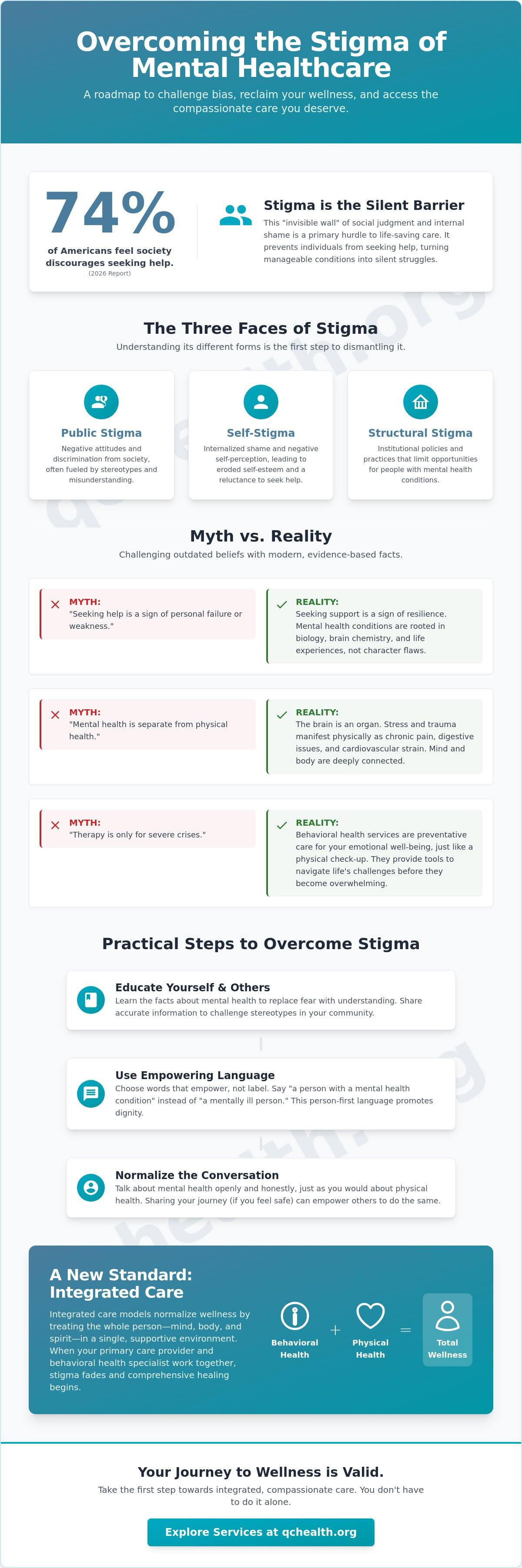
The Three Faces of Stigma: Public, Self, and Structural
Building awareness. Breaking barriers. Fostering hope. To truly understand the challenge of overcoming the stigma of mental healthcare, we must look at it through three distinct lenses. Stigma isn't a single obstacle; it's a multi-layered system that works to keep people in the shadows. Public stigma is the most visible, consisting of the negative attitudes and discriminatory behaviors of the society around us. This is the fear of being judged by a neighbor or misunderstood by a colleague. It's the reason 43% of employees in 2026 still avoid telling their manager about a mental health challenge. When the community views wellness through a lens of judgment, individuals learn to hide their needs.
Structural stigma is less visible but equally damaging. It involves systemic barriers in healthcare funding, insurance limitations, and the lack of resources in specific zip codes. When quality care is physically or financially out of reach, it sends a loud message that your health isn't a priority. These layers interact in a way that creates deep discouragement, particularly in underserved areas. A person might see a lack of local clinics, hear a disparaging comment at a community event, and then decide they are simply too weak to seek help. This cycle is what we are here to break. We believe that health is a shared responsibility, and every person deserves a path to Wellness that is clear of these hurdles.
Recognizing Self-Stigma
The most painful layer is often the one we carry inside. You aren't your diagnosis. There's a vital difference between having a health condition and being that condition. Self-stigma is the internalization of social prejudice. To fight this, we encourage practicing deep self-compassion and consciously rejecting the external judgments you've heard your whole life. You are worthy of Care, regardless of what the world says. Reclaiming your identity is a powerful step in overcoming the stigma of mental healthcare.
Confronting Public and Structural Barriers
Managing your health shouldn't mean staying home or hiding your journey. You can navigate social activities and your career while prioritizing your well-being. It requires a mix of personal advocacy and a community that has your back. Collective effort is what changes local policies and increases funding for essential services. By seeking out a Charlotte care center that recognizes these systemic hurdles, you find a partner who understands the fight. We aren't just treating symptoms; we're advocating for a world where your health is respected as a basic necessity.
Practical Steps to Overcome Stigma in Your Daily Life
Building a sanctuary. Protecting your peace. Choosing your allies. The environment you cultivate plays a massive role in overcoming the stigma of mental healthcare. If your social circle is filled with judgment or outdated beliefs, your journey toward wellness will feel twice as steep. Surround yourself with people who treat health as a holistic priority. This isn't just about feeling good; it's about creating a safety net that allows you to be vulnerable without fear. When you share your experiences, you aren't just talking; you're lowering the barrier for the next person who might be struggling in silence.
Education is a powerful tool for change. You don't need to be a clinical expert to make an impact. Simply using "Do vs. Don’t" language can shift the atmosphere in your home or workplace. For example, don't use words that stigmatize or mock behavioral needs. Do use language that centers the person's worth and their specific health journey. Finding the right support is also a practical step that removes the mystery from the process. If you're looking for affordable mental health counseling Charlotte NC, there are community-centered resources designed to bridge the gap between need and access. Taking these small, daily actions transforms a systemic problem into a series of manageable victories.
Speaking Your Truth
Talking to family and friends about your needs can be the hardest step. We recommend leading with your values. Instead of starting with a list of symptoms, start with your commitment to your family's long-term well-being. Use value-based phrases like, "Because I value being a present parent, I am working with a professional to manage my stress." Naming your practitioners, such as our lead specialists, adds a human face to the clinical process. It makes the care feel personal and accountable rather than detached or shameful. This transparency is a cornerstone of overcoming the stigma of mental healthcare.
Joining the Community Effort
Wellness is a shared responsibility. We invite you to join us in collaborative participation through local health fairs and outreach programs. By showing up, you become a foundational civic pillar. You advocate for health equity just by existing as a person who prioritizes their well-being. Advocacy isn't always about shouting from the rooftops. Sometimes, it's just about encouraging a neighbor to view their mental health with the same respect they give their physical health. If you are ready to take that next step, we encourage you to schedule your initial consultation with our compassionate team today.
A New Standard: How Integrated Care Normalizes Wellness
Healing the heart. Strengthening the mind. Restoring the spirit. We believe that health cannot be fragmented into separate silos. A new standard is emerging in our community where we treat the whole person rather than just a list of symptoms. When you visit your primary doctor and your therapist at the same location, the traditional barriers of shame begin to dissolve. You aren't just visiting a specialist; you're attending to your life. This model of integrated behavioral health primary care Charlotte residents rely on turns Wellness into a standard part of a routine check-up. By receiving medical evaluations and counseling under one supportive roof, we make overcoming the stigma of mental healthcare a practical reality for every family.
Normalizing the conversation. Lowering the stakes. Integrating the Care. In many traditional settings, the physical distance between a doctor's office and a counseling center reinforces the idea that the mind is separate from the body. We reject that division. When your behavioral health provider is just down the hall from your pediatrician or primary doctor, it sends a clear message that your mental well-being is a vital pillar of your physical health. This seamless transition reduces the anxiety of seeking help. It removes the "otherness" that often keeps people from the services they need. We're here to ensure that your journey toward health is as smooth and dignified as possible.
The QCHC Approach to Compassionate Care
Our organization operates from a mission-driven emotional style that prioritizes our neighbors who have been historically underserved. We understand that barriers to health are often systemic. That's why we provide accessible medical services regardless of your insurance status. We're a foundational civic pillar committed to eliminating health disparities through innovative, community-centric Care. Our practitioners are your neighbors. Our leadership is accountable to you. We don't just offer appointments; we offer a partnership in your long-term socio-economic and physical well-being.
Your Journey Starts Here
Taking the first step is often the bravest act you'll perform. You can book an appointment for our behavioral health services by calling our office directly or using our online portal. When you arrive at our Beatties Ford Road facility for your first evaluation, you'll find a modern environment that remains human and compassionate. We'll listen to your story, respect your privacy, and collaborate on a plan that empowers you. This is how we move forward together. At QCHC, health is a journey we take together.
Reclaiming Your Wellness: The Path Forward
Empowering individuals. Dismantling barriers. Building community. We've seen that overcoming the stigma of mental healthcare is a collective journey that begins with a single, courageous step. By identifying the silent barriers of public and self-stigma, we can replace outdated misconceptions with the reality of modern, integrated Care. Your mental well-being isn't a secondary concern; it's a vital pillar of your overall physical health. Choosing a path of transparency and seeking professional support is an act of strength that benefits your entire family and our shared community.
With over 20 years of experience serving the Charlotte community, we understand the unique challenges our neighbors face. Our state-of-the-art facility on Beatties Ford Road offers a welcoming environment where you can access holistic support from licensed clinical social workers and dedicated counselors. We're committed to providing high-quality Care that treats you as a whole person, mind, body, and spirit. Begin your journey to wellness with our compassionate Behavioral Health Services today. You don't have to navigate these waters alone. Your health is our shared responsibility, and your brighter future starts with a conversation.
Frequently Asked Questions
Is mental health stigma still a problem in 2026?
Yes, stigma remains a significant barrier to wellness. While 81% of Americans recognize the importance of mental well-being, 74% believe that society still discourages people from seeking help. This gap shows that while awareness is high, the fear of judgment continues to prevent many from accessing the Care they deserve. Recognizing these social pressures is a vital step in overcoming the stigma of mental healthcare.
Can I get mental health support if I don’t have insurance in Charlotte?
You can absolutely access high-quality support without insurance at our community-focused facilities. We operate with a mission-driven commitment to serve everyone, especially our neighbors in underserved areas. We offer affordable options and sliding-scale services to ensure that financial status never stands in the way of your health. Your worth is not defined by your insurance coverage.
How do I know if my feelings are "normal" or if I need professional help?
Professional help is recommended when your emotions or behaviors begin to interfere with your daily life, work, or relationships for more than two weeks. You don't need to be in a crisis to reach out. Identifying symptoms early is a proactive health strategy. If you feel overwhelmed or "not like yourself," a licensed counselor can help you navigate those feelings safely.
What is the difference between behavioral health and mental health?
Behavioral health is a broad term that includes mental health alongside your daily habits and actions. It looks at how your behaviors impact your overall well-being, including things like sleep patterns or substance use. Mental health specifically focuses on your emotional and psychological state. We treat both as inseparable parts of your total physical health.
How can I support a family member who is afraid of the stigma of therapy?
Support them by normalizing the conversation and treating behavioral health as a standard part of overall wellness. Listen with deep empathy and without judgment. Offer to help them research providers or accompany them to their first appointment. Remind them that seeking support is an act of courage and that their health is a shared family responsibility.
Will my employer find out if I seek mental health counseling?
No, your employer will not know about your treatment unless you choose to share that information yourself. Privacy laws and strict clinical standards protect your medical records and counseling sessions. Seeking help is a confidential journey. We prioritize your privacy to ensure you feel safe and empowered while overcoming the stigma of mental healthcare in your professional life.
What happens during a behavioral health evaluation?
An evaluation is a compassionate, one-on-one conversation where a licensed professional learns about your history and current challenges. We listen to your story to understand your unique needs and goals. This isn't a test; it's a collaborative process. Together, we create a personalized plan that serves as a roadmap for your journey toward healing and growth.
How does integrated care help reduce the shame of seeking help?
Integrated care reduces shame by placing behavioral health services in the same building as your primary doctor. This treats the mind and body as a single unit. Walking into a multi-service clinic feels like a standard medical visit rather than a specialized appointment. This proximity normalizes wellness and makes seeking support feel like a natural part of your routine healthcare.



Comments