


Diabetes Management in Charlotte, NC: Medication and Nutrition

Medication access is one part of diabetes management in Charlotte, NC. Whether a practice can fill insulin or another diabetes medication depends on its pharmacy and your prescribed treatment plan. Insulin helps regulate blood sugar by helping the body absorb sugars, and regular glucose testing is part of diabetes management.
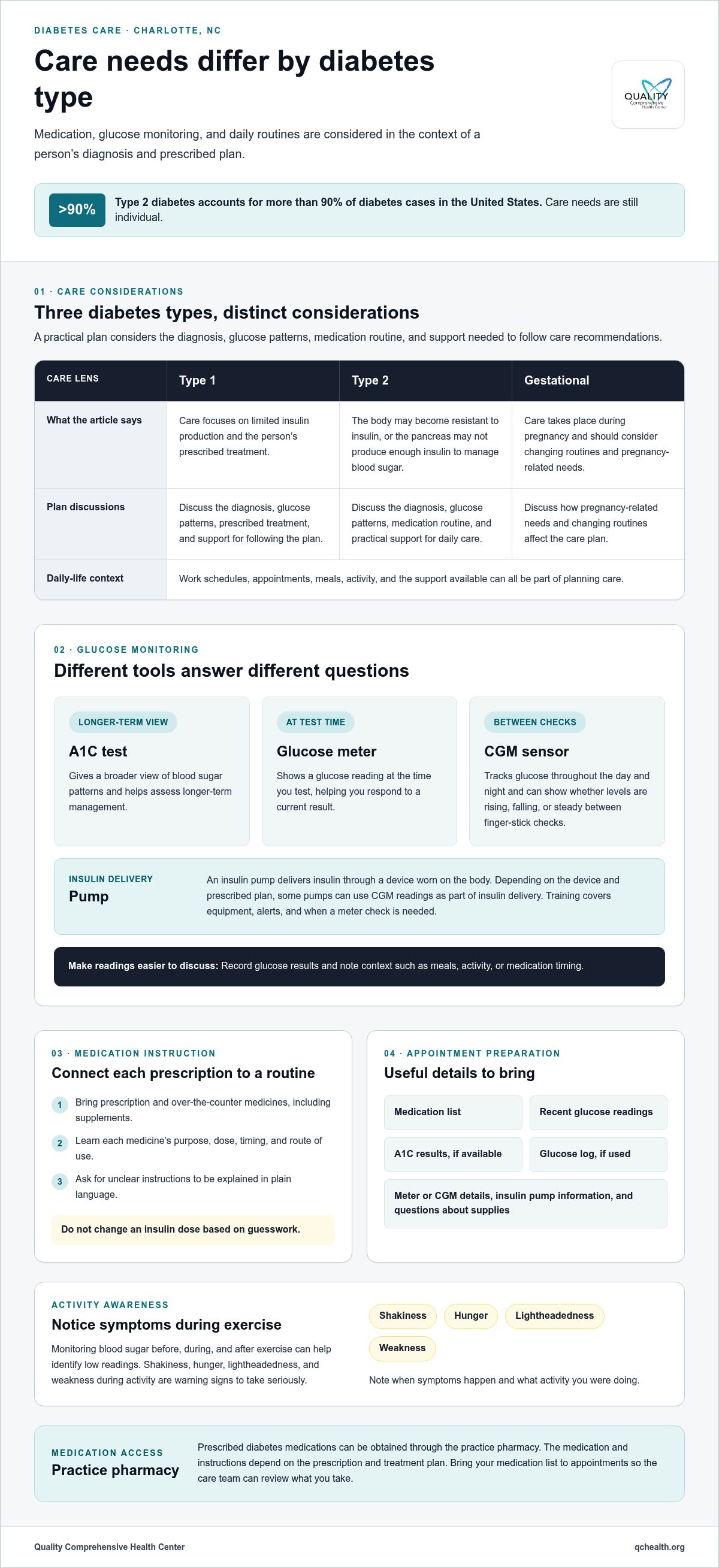
It’s understandable to want clear answers about where to get medication and how to use it safely. Diabetes care can also involve instruction tailored to the type of diabetes you have and nutrition support that fits everyday life. Type 2 diabetes accounts for more than 90% of diabetes cases in the United States, but care needs are individual.
This guide explains how medication access and insulin instruction fit into care for Type 1, Type 2, and gestational diabetes. It also covers glucose monitoring, nutrition services, and how Quality Comprehensive Health Center’s pharmacy and care services may support people and families in Charlotte.
Table of Contents
Can I get my insulin or diabetes medications through your practice?
Yes. Prescribed diabetes medications can be obtained through the practice pharmacy. The medication and instructions depend on your prescription and treatment plan. Insulin helps regulate blood sugar by helping the body absorb sugars, while other medicines may work differently. Keep testing blood glucose as directed, and bring your medication list to appointments so the care team can review what you take.
Mayo Clinic’s overview explains diabetes and care options in accessible terms. Watch it for context on how medication and nutrition can fit into a care plan:
An A1C test gives a broader view of blood sugar patterns, while a glucose meter shows a reading at the time you test. These tools answer different questions: an A1C result helps assess longer-term management, and a meter reading helps you respond to a current result. Record readings and note details such as meals, activity, or medication timing. That context can make patterns easier to discuss.
Continuous glucose monitoring (CGM) uses a sensor to track glucose throughout the day and night. It can show whether levels are rising, falling, or steady between finger-stick checks. An insulin pump delivers insulin through a device worn on the body. Depending on the device and prescribed plan, some pumps can use CGM readings as part of insulin delivery. Training helps you understand the equipment, respond to alerts, and know when a meter check is needed.
Coverage for diabetes visits, education, medications, and supplies through insurance or Medicare in North Carolina depends on the plan, item, and eligibility rules. Review your benefits for covered services, device requirements, and possible out-of-pocket costs. Costs vary with visit needs, education, prescribed medicines, and supplies.
To prepare for a first diabetes appointment, bring your medication list, recent glucose readings, and any A1C results you have. Include your meter or CGM details, insulin pump information, and questions about supplies. If you use a glucose log, bring it too. These examples help the clinician understand your routine and identify what you want to address.
Care for Type 1, Type 2, and gestational diabetes
For diabetes management in Charlotte, NC, care should reflect the type of diabetes and the person’s daily needs. Type 1, Type 2, and gestational diabetes involve different treatment considerations. A practical plan starts by discussing the diagnosis, glucose patterns, medication routine, and the support needed to follow care recommendations. For example, someone managing work shifts may need to discuss how appointments fit their schedule.
Type 2 diabetes accounts for more than 90% of diabetes cases in the United States. It can develop when the body becomes resistant to insulin or the pancreas doesn’t produce enough insulin to manage blood sugar. Type 1 care focuses on the body’s limited insulin production and the person’s prescribed treatment. Gestational diabetes care takes place during pregnancy, so discussions should consider changing routines and pregnancy-related needs.
People with prediabetes can discuss practical next steps, including nutrition, activity, and follow-up. For those living with diabetes, monitoring blood sugar before, during, and after exercise can help identify low readings. Shakiness, hunger, lightheadedness, and weakness during activity are warning signs to take seriously. Note when symptoms happen and what activity you were doing.
Hospitals and clinics serve different care needs. Hospitals may address complex medical concerns, while clinics can support routine follow-up and ongoing care. For diabetes management in Charlotte, NC, consider the support you need, access to appointments, and whether the setting works for continued visits. The best fit depends on your health needs and follow-up plan.
Uninsured or low-income Charlotte residents can seek primary care from community-based healthcare practices serving underserved populations. Consider appointment access and how ongoing follow-up is organized. A convenient location can make regular visits easier to maintain, and clinic hours matter when work, caregiving, or transportation affects scheduling.
An in-home care plan can organize everyday support around your routines. For example, it might coordinate medication reminders, glucose checks, meals, activity, and help from family members. This can clarify daily tasks for you and your support network. In-home planning does not replace medical attention when complications require urgent care.
Without blood sugar management, diabetes can increase the risk of heart and circulatory diseases and damage to the eyes and kidneys. Charlotte residents seeking a community-based starting point can explore local primary care options and consider what follow-up support would help them stay engaged in care.
Medication and insulin instruction
Medication instruction connects each prescription to a clear daily routine. Bring all prescription and over-the-counter medicines, including supplements, to your appointment. For each one, learn its purpose, dose, timing, and route of use. A written medication list can prevent confusion when prescriptions change. If a label or instruction is unclear, ask for an explanation in plain language before following the plan.
Insulin helps regulate blood sugar by helping the body absorb sugars. Instruction should explain how the prescribed insulin fits into meals, activity, and glucose monitoring. PrimeCare Medical Center advises that people with diabetes time meals and medications to help keep blood sugar levels stable. For example, ask how your plan accounts for a delayed meal or a change in your usual schedule. Don’t change a dose based on guesswork.
For insulin therapy, practice the steps you’ll use at home. Review the prescribed dose, delivery method, and how to record each dose. Try “show, then explain”: demonstrate the steps, then describe them in your own words. This can surface questions before you manage insulin independently. Keep written instructions with your medication list for easy reference.
An insulin pump adds device routines to medication management. Learn the pump’s prescribed settings, how to recognize alerts, and what your care plan says to do if a device issue arises. If you also use continuous glucose monitoring, discuss how to interpret readings alongside symptoms and meter checks. Record examples, such as an alert during a walk, and review them at follow-up. Don’t change pump settings without instructions from your healthcare professional.
Medication teaching should also cover what to do when daily routines shift. Ask how your existing plan addresses missed doses, illness, travel, or an active day. The answer depends on the medicine and your prescription, so keep instructions specific to each medication. A simple log can include the time taken, glucose readings, meals, and unusual symptoms. Bring it to appointments for a focused review.
Use a short checklist during medication instruction:
Confirm each medication’s name, prescribed dose, and timing.
Practice the insulin or pump steps you’ll use at home.
Learn which readings or symptoms your plan says to report.
Write down who to contact about a medication question.
These steps can make diabetes medication management more organized without replacing individualized instructions. For a chronic condition such as diabetes, an updated medication list and clear routine help connect appointments with everyday care. Bring questions about insulin, supplies, and changes in activity to your next discussion.
What dietary interventions help with managing diabetes?
Diabetes self-management education turns broad health goals into practical daily skills. A session can help connect meals, activity, glucose readings, and medication routines. Bring a sample day of meals and questions, such as how to plan lunch during a work shift. Concrete details help make the discussion more useful than general advice.
Nutrition education can focus on meal planning to support blood sugar management and help avoid diabetes-related weight gain. Write down what you eat, when you eat, and any glucose readings you track. Reviewing the record can reveal patterns to discuss with your care team. Meal timing matters, especially when medication is part of your routine.
Diabetes education classes can provide structured learning and a chance to practice skills with others. Before attending, list topics you want help with, such as reading food labels, planning meals, or adapting to changes in your schedule. Ask how lessons address different types of diabetes and whether there is time for questions. Classes should help turn information into steps you can use at home.
Gestational diabetes education should reflect pregnancy and your daily routine. Bring questions about meal timing, glucose monitoring, and fitting recommended activity into your day. A sample schedule can make the discussion practical. Education can also help you identify changes to discuss with your care team as your needs shift during pregnancy.
To find a certified diabetes care and education specialist in Charlotte, ask your healthcare professional for a referral and search professional directories using that credential. Prepare questions about nutrition counseling, class formats, and support for your type of diabetes.
For local support groups and diabetes prevention programs, start with Charlotte clinics, hospitals, and community health organizations. Ask about group discussions, prevention education, eligibility, and whether sessions cover practical topics such as meal planning and activity. Choose options that fit your schedule and address the skills you want to build.
Use education sessions to set manageable lifestyle steps. A simple plan might include noting meals, planning grocery choices, and discussing activity goals with your care team. These habits support blood sugar management, while ongoing care can help identify concerns such as kidney or eye complications. Aim for a routine you can maintain and adjust with guidance.
Bring food and glucose notes to make nutrition discussions specific.
Write down questions about meals, medication timing, activity, and pregnancy.
Choose classes or support that address the skills you need to practice.
Medical nutrition therapy
Medical nutrition therapy can turn diabetes meal planning into choices that fit your health needs and daily routine. Bring a typical day of meals, snacks, and medication times to a nutrition discussion. For example, note whether you eat breakfast before work or lunch shifts from day to day. Those details help shape practical goals instead of a one-size-fits-all menu.
Meal planning should focus on a diabetes-friendly diet and avoiding diabetes-related weight gain. Start by writing down meals and snacks, then discuss how those choices fit your blood sugar goals. Your plan can account for foods you enjoy, household routines, and access to ingredients. Avoid treating one food as the whole solution, since the overall pattern matters.
Discuss medication timing and meals together. Time meals and medications as directed to help manage blood sugar levels. Bring your medication schedule and note when meals are usually delayed or skipped. A nutrition professional can help you discuss these routines with your care team so food choices and prescribed instructions work together.
At a counseling visit, ask how to adapt meals when plans change. For instance, compare your routine on a workday with one at home. You can also bring food labels or a grocery list and ask how to compare choices. Practical examples make general guidance easier to turn into repeatable decisions.
Which Charlotte providers offer diabetes education and nutrition counseling? Look for Charlotte healthcare practices that provide diabetes-focused specialty care and nutrition counseling, and ask about the professional’s training and the topics covered. Specialty care options can be explored through Quality Comprehensive Health Center’s website.
Before a visit, prepare a short list of priorities. Include questions about meal timing, preferred foods, weight concerns, and how your medication schedule fits your day. If you track glucose, bring readings alongside meal notes. These examples can help make the discussion specific to your experience.
Bring a meal and medication schedule to discuss timing.
Use grocery lists and food labels to raise practical questions.
Choose nutrition goals that fit your routines and food preferences.
Medical nutrition therapy is most useful when you can apply the guidance between visits. Start with one clear change, such as planning a regular breakfast or preparing a grocery list. Note how the routine works, then bring questions and examples to your next care discussion. This keeps nutrition planning connected to everyday life.
Quality Comprehensive Health Center: Specialty care
Quality Comprehensive Health Center offers primary care and specialty care in Charlotte for people with ongoing health needs, including questions about diabetes. These services provide an opportunity to discuss your health concerns and next steps that fit your situation.
Care needs can involve more than one part of life. Pediatric care supports children and families, while behavioral health services address mental and emotional well-being. If diabetes affects your daily routine or raises new questions, primary care or specialty care at Quality Comprehensive Health Center can be a starting point for discussing your needs.
Bring your medication list, glucose notes, and questions about nutrition or follow-up to help make that discussion concrete. You’re invited to contact Quality Comprehensive Health Center or visit qchealth.org.
Take the Next Step Toward Ongoing Support
Building a diabetes care routine is an ongoing process, and a conversation can help identify support that fits your life. For diabetes management in Charlotte, NC, Quality Comprehensive Health Center offers primary care and specialty care to discuss your ongoing health needs and care priorities. Families can also turn to its pediatric care when a child needs support.
Bring forward the questions that matter most to you, whether they involve daily routines, treatment discussions, or coordinating care for your family. Quality Comprehensive Health Center offers primary care, specialty care, and pediatric care as part of its commitment to serving the Charlotte community.
Contact Quality Comprehensive Health Center to take a practical next step. You deserve care that treats your needs with respect and helps you move forward with confidence.
Frequently Asked Questions
Can you help with diabetes-related complications?
Yes, primary and specialty care can help address health concerns connected with diabetes and ongoing care needs. Unmanaged blood sugar can contribute to heart and circulatory disease, eye damage, and kidney damage. Bring new symptoms, changes in vision, or questions about recent health results to an appointment. If a concern feels severe or rapidly worsens, seek urgent medical attention rather than waiting for a routine visit.
How often will I need to come in for visits?
Your visit schedule should reflect your current care needs, treatment plan, and changes that need follow-up. For example, a medication adjustment or new concern may call for a different follow-up plan than a stable routine. Keep a list of questions between appointments and note changes in your health. Discuss these details during visits so you and the care team can plan appropriate next steps together.
What exercise is appropriate for someone with diabetes?
Choose activity that fits your health and current abilities, and follow your care plan for exercise. Monitor blood sugar before, during, and after activity to notice changes. Shakiness, hunger, lightheadedness, or weakness can signal low blood sugar during exercise. For example, record the activity and readings when symptoms occur, then share them with your healthcare professional before changing your routine.
What if I already have an endocrinologist?
You can continue working with your endocrinologist while using primary care for other health needs. Tell both care teams about medication changes, new test results, and questions that affect your overall plan. For example, bring an updated medication list to each appointment and note which clinician recommended each change. Clear communication can reduce confusion and keep care discussions focused on your priorities.
What diabetes management clinics and endocrinologists are available in Charlotte, NC?
Charlotte residents can seek diabetes-related support through hospital-based services and community healthcare practices. Quality Comprehensive Health Center offers primary care and specialty care to support broader health needs alongside diabetes concerns. An endocrinologist focuses on hormone-related conditions, while primary care can address general health and ongoing care coordination. Consider which support best matches your needs and current care plan.
What diabetes treatment options are available in Charlotte, including insulin pumps and continuous glucose monitors?
Treatment may include prescribed medication, insulin therapy, glucose monitoring, or devices such as insulin pumps and continuous glucose monitors. These tools serve different roles: a pump delivers insulin, while a monitor tracks glucose patterns. Device use and medication choices should fit your treatment plan. Bring device questions, readings, and a current medication list to an appointment to make the discussion specific.
What are the risks of poorly controlled diabetes and when should I seek urgent care?
Poor blood sugar management can increase the risk of heart and circulatory disease and damage to the eyes and kidneys. Seek urgent medical attention for severe or rapidly worsening symptoms rather than waiting for a scheduled appointment. For non-urgent concerns, record what changed, when it began, and any related glucose readings. Sharing those details can make follow-up conversations more useful.
Which Charlotte providers offer diabetes education and nutrition counseling?
Quality Comprehensive Health Center is presented as a Charlotte option for primary and specialty care. The guide also discusses diabetes self-management education and nutrition support; ask the practice about available services.



Comments