


Children's Primary Care for Newborns Through Young Adults

A pediatrician does more than treat a sick child. Children's primary care supports health from infancy through adolescence with preventive visits, vaccinations, developmental monitoring, and care for common illnesses. Pediatricians can also help families understand when a child may need more specialized support.
It’s natural to want clear answers about what happens at a checkup, which vaccines may be due, and where to turn when a concern comes up between visits. Understanding how pediatric care works can help you plan and feel ready to speak up for your child.
This guide explains what pediatricians do and what families can expect from well-child visits as children grow. You’ll also learn how vaccination needs are considered, what to look for in clinic hours and after-hours care, and how appointment support can help you take the next step.
Table of Contents
Pediatric care for newborns through young adults
From a newborn’s first checkups to a teenager’s changing health needs, pediatricians focus on children’s growth and well-being. A child’s primary care team can also help families coordinate questions, screenings, and support as needs change.
Care Across Childhood
Pediatric care covers babies, children, and teens through age 18, with attention tailored to each child’s stage. For a baby, a visit may focus on feeding, growth, and early development. For a school-age child, families may discuss sleep, behavior, or a new health concern. Teen visits can make room for questions about emotional well-being, relationships, and growing independence.
As young adults approach the transition from pediatric care, families can plan how health records, ongoing concerns, and care responsibilities will transfer. Bring a short list of questions to the appointment, including what changes to expect before the next visit. This helps focus the conversation on the child’s current needs and next stage of development.
The Pediatric Medical Home
A pediatric medical home is a regular care team that knows a child’s health history and helps connect care over time. Rather than treating each concern in isolation, the team can consider how a new symptom relates to previous visits, development, or ongoing needs. Pediatricians may work with nurses and other healthcare professionals, including supportive family practices like bellafamilychiro.com, to build a fuller picture.
For example, a parent can discuss a recurring concern during a visit, learn what to observe at home, and understand what follow-up may help. Keep an up-to-date medication list and note when symptoms began. Those details help the care team assess the situation and coordinate next steps if another professional’s input is needed.
Choosing a Child’s Provider
When choosing a pediatrician or family doctor, consider who will care for your child, how the practice handles routine and sick visits, and whether its location and hours fit your family. Pediatricians focus on children’s health, while family physicians care for patients of different ages, including children. Both can provide primary care for children.
Ask how the practice supports communication, referrals, and continuity as your child grows. Look for a setting where caregivers can raise concerns, understand the care plan, and keep track of follow-up. If your child has ongoing or complex needs, ask how the provider coordinates care with other healthcare professionals.
Children’s primary care can include preventive checkups, assessment of common illnesses, developmental monitoring, and guidance on health concerns. A provider may also discuss screenings, recommend follow-up, or coordinate with other specialists when additional expertise is needed. Routine oral health is another key aspect of comprehensive child development, and family-focused providers like Hunters Corner Dental highlight how regular checkups and preventive care establish positive habits from an early age. Bring your questions and relevant health history to make the visit more useful.
Coverage for pediatric primary care depends on your insurance plan and benefits. To find an in-network provider, use your insurer’s directory and filter for pediatric or family medicine, then compare the listed practice with your plan documents. Confirming network status for your specific plan can help you understand how a visit will be covered.
To find children’s primary care clinics near you in Charlotte, search your insurer’s directory by location and pediatric care, then narrow the results by travel distance and office hours. Review each practice’s appointment process and the ages it serves. This can help you shortlist clinics that fit your child’s needs and your family’s routine.
Well-child visits and developmental monitoring
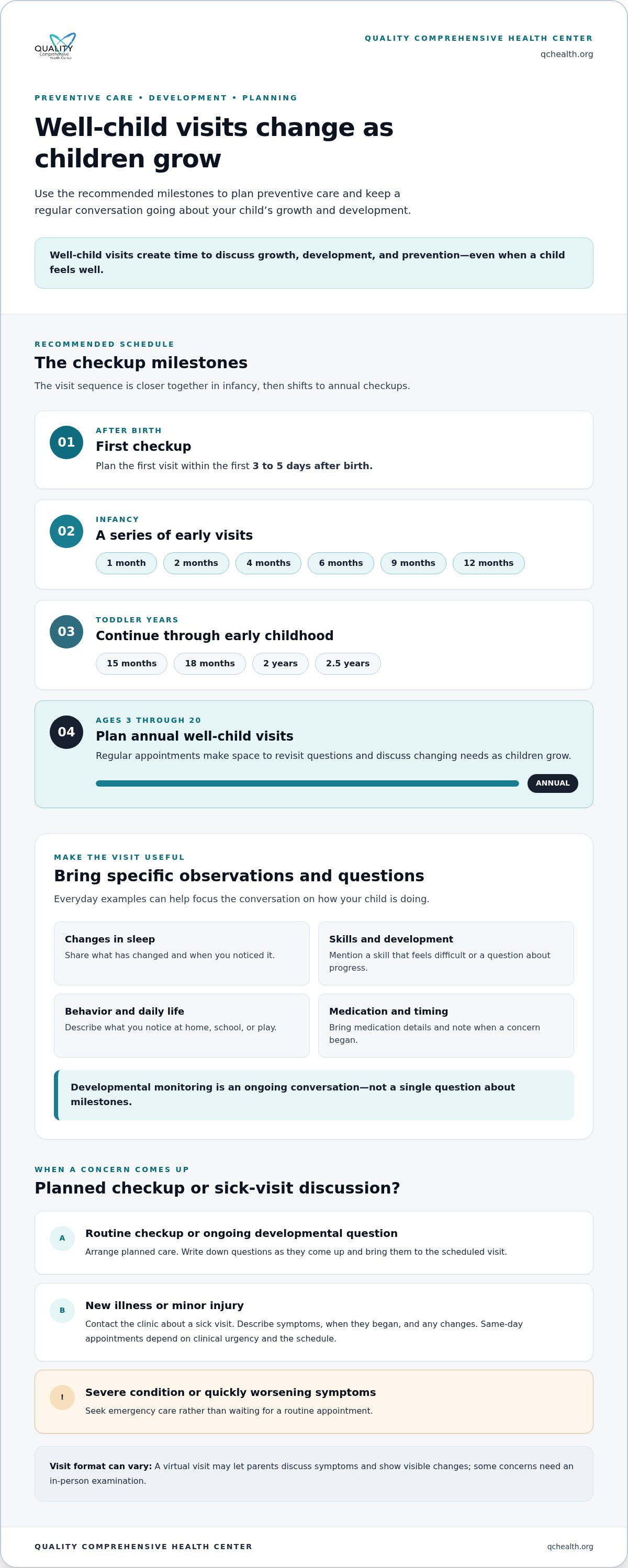
Well-child visits give parents a regular opportunity to discuss growth, development, and prevention, even when a child feels well. Planned checkups help families prepare, while sick visits address a new concern such as a fever, cough, or minor injury.
A recommended schedule includes a first visit within the first 3 to 5 days after birth, followed by visits at 1, 2, 4, 6, 9, and 12 months. Further visits are recommended at 15 and 18 months, at 2 years, and at 2.5 years. From ages 3 through 20, plan annual well-child visits.
At a checkup, share examples that help explain how your child is doing. You might mention a change in sleep, difficulty with a skill, or a question about behavior. Bring medication details and notes about when a concern began. These specifics help keep the conversation focused and useful.
Developmental monitoring is an ongoing conversation, not a single question about milestones. Describe what your child does at home, school, or play. The care team can discuss progress and identify what may deserve closer attention. Write down questions as they come up and bring them to the next scheduled visit.
For a new illness, contact the clinic about a sick visit and describe the symptoms, when they began, and any changes. Same-day appointments depend on clinical urgency and the schedule. A virtual visit may let parents discuss symptoms and show visible changes, while some concerns need an in-person examination.
When deciding between a clinic visit and an emergency department, consider how urgent the concern is. A routine checkup or ongoing developmental question belongs in planned care. A new illness or minor injury may be appropriate for a sick-visit discussion. If a condition seems severe or worsens quickly, seek emergency care rather than waiting for a routine appointment.
Keep preventive and sick-visit needs distinct when arranging care. Tell the scheduling team whether the visit is for a planned checkup, a new symptom, or a follow-up concern. That context helps direct the appointment request. For families organizing ongoing visits, preventive care planning can help keep questions and next steps together.
Regular visits also create space to revisit questions as children grow. An annual appointment for a school-age child, for example, can address a new concern alongside routine prevention. Infants have a closer sequence of visits, giving parents planned opportunities to discuss feeding, sleep, and development during the first years.
Clinic hours and after-hours availability
Clinic hours affect when families can arrange routine visits, sick appointments, and follow-up. Compare the schedule with school, work, transportation, and the times your child is most likely to need care.
Some pediatric offices offer weekday appointments, while others may have evening or weekend hours. Schedules differ by location, so identify the specific clinic before planning a visit. For example, a parent who can’t leave work during the day may prioritize an evening appointment. A family balancing school and activities may prefer an earlier visit or weekend slot.
Use these steps to plan around a clinic’s published schedule:
Choose the location that works for your usual route, such as home, school, or work.
Compare its weekday opening and closing times with your family’s daily schedule.
Look for evening or weekend hours if daytime appointments are difficult.
Note how the clinic handles calls when the office is closed.
After-hours care means guidance or treatment outside regular clinic hours. The available options depend on the practice’s arrangements. A recorded message may direct families to an on-call service, while another clinic may provide instructions for urgent concerns. Save the clinic’s after-hours directions with your child’s health information so you can find them when needed.
Holiday schedules may differ from regular weekday hours. Before a holiday, review the clinic’s posted schedule and note when regular appointments resume. If your child develops a concern while the office is closed, follow the practice’s after-hours instructions. For a condition that seems severe or worsens quickly, seek emergency care rather than waiting for the next opening.
For an after-hours call, prepare a concise description of what changed, when it began, and how your child is acting now. Mention relevant medicines or ongoing health needs. These details help the person responding understand the situation and explain an appropriate next step. Keep the clinic’s phone number and after-hours instructions somewhere caregivers can access, including during school pickups or travel.
Plan routine visits around hours that work for your household. For a new symptom, follow the clinic’s stated process for sick appointments instead of assuming routine scheduling applies. A clear plan for weekdays, weekends, and holidays helps you know which instructions to follow when the usual office schedule changes.
What vaccinations does my child need?
Vaccines are planned around a child’s age, health history, and prior doses. Most childhood vaccines are given by age 6.
Childhood Immunization Schedules
A vaccination schedule organizes recommended doses as children grow. At each visit, review the record with the care team and ask which vaccines are due next. If a dose was missed or the record is incomplete, share what you know so the team can assess next steps. Don’t assume a missed dose means starting over.
Keep a copy of your child’s vaccine record with other health documents. If you find older records later, bring them to the next appointment. Dates and vaccine details help the team compare past doses with the child’s current schedule instead of relying on memory alone.
Vaccine Information
Before a vaccination, ask what it protects against, when it is recommended, and what reactions to watch for afterward. Share your child’s health history, current medicines, and any previous response to a vaccine. This gives the care team useful context for discussing the plan.
Ask for written information to review at home, then note any questions that come up. For example, write down whether your child has had a previous reaction or whether you’re unsure which doses were given. Bring those questions to the appointment for a clear discussion tailored to your child.
Preparation can make a vaccine visit easier to follow. Bring the vaccine record, a list of medicines, and notes about past reactions. Tell the clinician if your child feels unwell or if their health circumstances have changed since the last visit. The team can consider this information alongside the schedule and explain the recommended next step.
After the visit, keep the updated record and note the date of the next recommended dose. If your child has a reaction, write down what happened and when. Contact the care team for guidance about symptoms that concern you, and share the details rather than trying to identify the cause yourself.
If your child is starting care at a new clinic, bring available records from the previous practice. If you don’t have the documents, explain what you remember and when your child may have received vaccines. The clinician can review the information with you and discuss how to keep the record complete going forward.
Use each well-child visit to discuss upcoming vaccines, not just those due that day. Asking, “What should we plan for next?” can help you understand timing and prepare. If your child is approaching school enrollment or changing care settings, mention the transition during the visit so vaccine questions can be part of the discussion.
Appointments and patient support
A clear appointment plan helps families prepare for checkups, new symptoms, and follow-up. Before calling or scheduling online, decide whether your child needs preventive care, an illness visit, or continued support for an existing concern. This helps the scheduling team understand what you need.
Prepare a few details before arranging the visit. Have your child’s full name, birth date, preferred contact information, and reason for the appointment ready. For a new symptom, note when it began and what has changed. For example, describe when a cough started and whether it disrupts sleep or school.
Bring useful information to the appointment, such as:
A current list of medicines and known allergies.
Relevant medical records, including vaccine information.
Questions about symptoms, development, or the care plan.
Contact details for caregivers who may need appointment updates.
These details give the care team a clearer picture of your child’s needs. If a parent or guardian can’t attend, agree in advance who will share the child’s history and receive instructions. Write down the questions to help ensure an important concern isn’t lost during a busy visit.
For insurance questions, have your plan information ready and ask how the appointment will be processed. Coverage and network participation depend on the individual plan. Keep any answers with your appointment notes, especially if your child has follow-up visits or needs care from more than one professional.
Families can also plan for communication needs. Tell the scheduling team if you need an interpreter, accessible instructions, or help understanding the next steps. If you prefer written directions, ask for key instructions in a format you can review at home. Clear information helps caregivers share responsibility for a child’s appointments.
After the visit, review the care instructions and record any follow-up discussed. Note the next appointment date, any changes to medicines, and which symptoms should prompt another call. If the plan is unclear, contact the care team using the practice’s stated communication process rather than relying on memory.
Before the next appointment, keep records and questions together in one place. A folder, secure digital note, or shared caregiver calendar can help track visit details and upcoming care. Explore appointment support as you plan your child’s next step.
Quality Comprehensive Health Center: Specialty care
Quality Comprehensive Health Center offers pediatric and primary care for children and families in Charlotte. Turn to its specialty care for health concerns that call for focused expertise, or consider behavioral health services when emotional well-being is part of your child’s needs. Its integrated services support families with connected health needs.
Quality Comprehensive Health Center serves Charlotte, North Carolina, with community-based care focused on underserved populations. Its approach emphasizes health equity and holistic support for individuals and families. If you’re looking for pediatric care or help connecting health needs, explore its primary, specialty, or behavioral health services.
To learn more about care for your family, visit Quality Comprehensive Health Center.
Build a Care Plan That Grows With Your Child
Your child’s health needs will change over time, so choosing care that can grow alongside them is a thoughtful next step. Identify the questions that matter most to your family and bring them to a care provider. Consistent children's primary care can help address new concerns while keeping your child’s broader well-being in view.
Quality Comprehensive Health Center offers pediatric and primary care, along with specialty care for needs that call for focused support. These services help families seek care for children while considering broader health needs in one care setting. Start with the concern you want to address and the support your family needs.
For a welcoming place to explore your family’s care options, contact Quality Comprehensive Health Center. Taking that first step can help you move forward with greater clarity and confidence.
Frequently Asked Questions
What is a pediatrician?
A pediatrician is a physician who focuses on children’s health, from infancy through adolescence. Pediatricians assess concerns, support preventive care, and help families understand a child’s changing health needs. For example, a parent can discuss recurring headaches, changes in sleep, or questions about school behavior. Pediatricians may also coordinate with other healthcare professionals when a child needs additional expertise or ongoing support.
Why does my child need routine checkups?
Routine checkups give families dedicated time to discuss health before a specific illness takes over the visit. Parents can raise questions about sleep, eating, mood, learning, or changes noticed at home. A written list helps keep the conversation focused. Bring medication details and relevant reports from school or another care professional so the clinician can consider the child’s day-to-day experience.
When should children have routine checkups and well-child visits?
Children need visits more often during infancy and early childhood, followed by annual checkups from ages 3 through 20. The recommended schedule includes a first visit within the first 3 to 5 days after birth, then visits at key infant and toddler ages. If your family has moved or missed appointments, bring available records and ask the care team to map out upcoming visits.
What vaccinations do children need by age in the United States?
Most childhood vaccines are given by age 6, and the schedule depends on a child’s age and vaccination history. Bring the child’s immunization record to appointments, including records from previous clinics or schools. If a dose is missing from the paperwork, share what your family remembers. The clinician can review the documented doses and discuss which vaccines are due next.
How can I schedule a first appointment and transfer my child's medical records?
Contact the clinic’s scheduling team to arrange your child’s first visit. Ask the previous practice to send records to the new care team, and bring any copies you already have. A brief health summary can help: include current medicines, allergies, past diagnoses, and the main reason for the visit. Keep a copy of the transfer request for your records.
When should I take my child to primary care, urgent care, or the emergency room?
Use primary care for routine health needs, ongoing concerns, and follow-up. Urgent care may be an option for a new problem that needs prompt attention but isn’t an emergency. Choose the emergency room for a severe or rapidly worsening condition. For example, discuss a persistent concern with your child’s regular care team, while sudden serious deterioration calls for emergency help.



Comments