


15 Essential Questions to Ask Your New Doctor: A Comprehensive Health Checklist

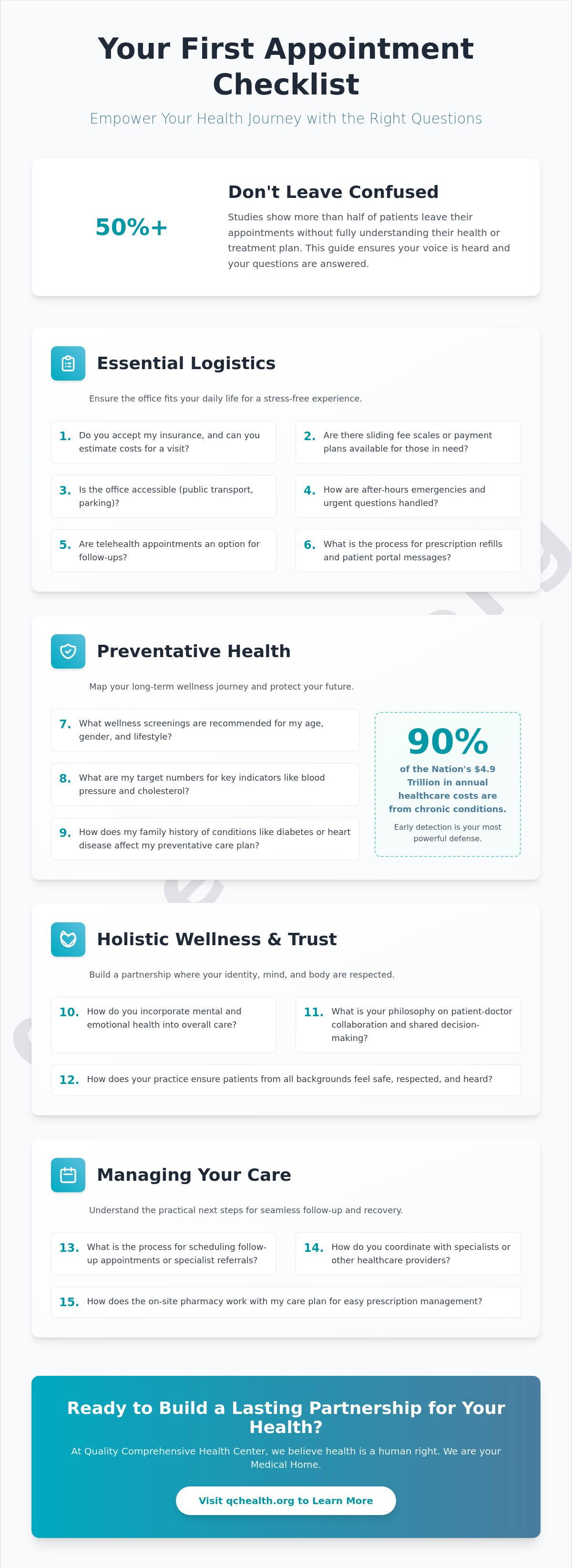
Studies show that over 50% of patients leave their medical appointments without fully understanding their health problems or treatment plans. It's a staggering statistic that highlights a gap in our healthcare system. When you're managing chronic conditions like hypertension or diabetes, feeling unheard or judged isn't just frustrating; it's a barrier to your well-being. You deserve a Medical Home where your identity is respected and your voice is heard. Preparing a specific list of questions to ask my new doctor is the first step toward reclaiming that power.
Rooted in the belief that health is a human right, we aim to lower the barriers to quality care. With the 2026 legislative shifts like the One Big Beautiful Bill Act and rising insurance premiums, finding affordable care is more vital than ever. This expert-backed checklist will empower your health journey by helping you build a trusting partnership with your provider. You'll learn how to evaluate clinic accessibility, understand your baseline risks, and ensure your care remains affordable. Let's walk through the 15 essential questions that turn a standard check-up into a collaborative foundation for your long-term health.
Key Takeaways
To ensure your peace of mind, learn how to confirm insurance compatibility and evaluate office accessibility for a seamless fit into your daily life.
To protect your future, discover how to identify age-appropriate screenings and discuss family health history to uncover hereditary risks.
To build a trusting Partnership, use our expert-backed questions to ask my new doctor to ensure your identity and mental health are treated with Respect.
To simplify your recovery, master the process of coordinating follow-up appointments and utilizing integrated pharmacy services for total care management.
Table of Contents
Essential Logistics: Ensuring the Office Fits Your Daily Life
A successful health journey begins long before you step into the exam room. It starts with the peace of mind that comes from knowing your provider is accessible, affordable, and aligned with your daily reality. In an era where healthcare costs are projected to rise by over 8% in 2026, managing the practical side of your care is a form of self-advocacy. Determining which questions to ask my new doctor regarding logistics can save you significant stress and protect your financial well-being. Logistics are the foundation of building a strong doctor-patient relationship; trust is difficult to maintain when you are worried about an unexpected bill or a missed bus connection.
Insurance, Billing, and Affordable Care Options
With the expiration of enhanced ACA subsidies in 2026 and the average cost of Silver plans rising to $752 per month, financial transparency is non-negotiable. You deserve to understand the cost of your care before the bill arrives. Start by asking if the clinic offers a sliding fee scale based on your income. This is a vital resource for the uninsured or those impacted by the One Big Beautiful Bill Act of 2025. Verify which specific lab services are covered by your plan; often, the doctor and the lab operate under different insurance contracts. If you have a high-deductible plan, inquire about flexible payment arrangements. A clinic that prioritizes your health will work with you to ensure costs do not become a barrier to treatment.
Office Accessibility and Communication Flow
Your Medical Home should be easy to reach and even easier to talk to. Evaluate the physical journey to the office. Check for proximity to Charlotte bus lines or confirm if there is dedicated, free parking. Beyond the commute, consider how the office handles your needs between visits. Ask about their preferred method for requesting prescription refills through their on-site pharmacy services. Inquire about the patient portal for viewing test results and sending non-urgent messages. Understanding these systems ensures you stay connected to your care team without unnecessary hurdles. Use these questions to ask my new doctor to gauge the office's efficiency:
How do you handle after-hours emergencies or urgent medical questions?
Are telehealth appointments available for routine follow-ups or behavioral health check-ins?
What is the typical turnaround time for a response through the patient portal?
Locate the clinic. Verify the route. Confirm the care. By addressing these logistics early, you create a stable environment where your wellness can flourish. You aren't just choosing a provider; you're selecting a partner who respects your time and your budget.
Preventative Health: Mapping Your Long-Term Wellness Journey
Preventative health is more than just a series of checkups. It's a proactive commitment to your future self. Since chronic conditions like heart disease, obesity, and diabetes account for 90% of the nation's $4.9 trillion in annual healthcare costs, early detection is your most powerful defense. When you step into a new clinic, you're establishing a foundation for years of care. Preparing specific questions to ask my new doctor regarding prevention ensures you aren't just reacting to symptoms but actively building a legacy of health. The National Institute on Aging offers a foundational list of questions to ask when choosing a new doctor that highlights why routine screenings are vital for long-term independence.
Screenings and Diagnostic Tests
Every body has different needs based on age, gender, and lifestyle. You shouldn't have to guess which tests are right for you. Ask your provider which wellness screenings are necessary for your current stage of life. Inquire about benchmarks for blood pressure and cholesterol; knowing your numbers is the first step toward controlling them. If you're managing complex health needs, verify the frequency of recommended blood work or imaging. This clarity allows you to plan your schedule and your budget effectively. Our practitioners at QC Health believe that transparency in testing builds the trust necessary for a lasting medical partnership.
Managing Family History and Chronic Risks
Your DNA tells a story, but it doesn't have to dictate your ending. Discussing your family history of hypertension or diabetes allows your doctor to identify hereditary risk factors early. This conversation is an act of advocacy for your children and your community. Ask how specific lifestyle adjustments can mitigate your genetic risks. Together, you can create a lifestyle changes for managing high blood pressure plan that feels sustainable and respectful of your daily life. This collaborative approach turns a clinical diagnosis into an actionable roadmap for Wellness.
Finally, bring a list of your current medications and supplements to every visit. With the new Medicare Part D drug cost caps taking effect in 2026, it's a perfect time to review your prescriptions for potential interactions or more affordable alternatives. Set clear goals for nutrition and physical activity that fit your unique lifestyle. When you and your provider are aligned on these objectives, you move beyond being a patient; you become the leader of your own health journey. Using the right questions to ask my new doctor transforms a simple appointment into a powerful strategy for lifelong wellness.
Holistic Wellness: Addressing Mental Health and Personal Needs
Health is a complete picture. It's not just the absence of illness; it's the presence of total well-being. True wellness requires a provider who looks beyond your blood pressure readings to see the person behind the chart. This holistic approach is essential for addressing mental health and personal needs that often go unspoken in clinical settings. When compiling your list of questions to ask my new doctor, ensure you include topics that cover your emotional and sexual health. You deserve a space where you can speak your truth without fear of judgment.
Behavioral Health and Emotional Support
Mental health is health. It's that simple. Persistent stress, anxiety, and depression often manifest as physical symptoms like chronic fatigue, tension headaches, or digestive issues. You deserve a Medical Home where behavioral health services are integrated directly into your primary care. Ask if the clinic provides on-site counseling or if they have a streamlined process for therapy referrals. It's helpful to discuss the signs you might need to talk to a therapist during your initial visit to establish a baseline for your emotional well-being. As of February 16, 2026, updated HIPAA regulations ensure your privacy regarding substance use and mental health is more protected than ever, making it a safe time to be honest about your struggles.
Sexual Health and Preventive Screenings
Sexual health is another pillar of your overall wellness that requires an open, judgment-free dialogue. Your provider should be a partner in prevention, not a source of shame. Inquire about the frequency of HIV/STD screenings based on your specific lifestyle and needs. If you're seeking proactive protection, ask about PrEP or PEP treatments for HIV prevention. For families, requesting information on confidential teen or adolescent health services is a vital step in protecting the next generation. These conversations are foundational to questions to ask when choosing a new doctor because they reveal if a provider truly values your whole identity.
A holistic provider will also ask about lifestyle stressors, such as housing stability or food access, because they know these factors impact your physical health. By including these questions to ask my new doctor, you ensure that every part of your life is seen and valued. This collaborative participation is how we build a healthier community together. We aren't just treating symptoms; we're supporting people. When your doctor understands your stressors and your joys, they can provide care that is both technologically advanced and deeply human.
Building Trust: Ensuring Your Doctor Respects Your Identity
Trust is the quiet foundation of every successful Medical Home. It's the feeling that you can be your authentic self without fear of being minimized, ignored, or misunderstood. For many in marginalized communities, a doctor's office has historically been a place of anxiety rather than healing. Building a partnership requires more than just clinical expertise; it demands a provider who actively practices affirming care. When you prepare your questions to ask my new doctor, prioritizing identity and respect ensures you receive treatment that honors your lived experience. In a landscape of rising costs and legislative shifts, finding a provider who views you as a whole person is the ultimate act of self-care.
Cultural Competency and Respectful Communication
Healing happens best when your cultural background is seen as a strength, not an obstacle. Rooted in the pursuit of social justice, we believe that health equity starts with a conversation. Inquire about how the provider handles cultural differences in health beliefs or dietary traditions. If English isn't your primary language, ask about the availability of professional translation services to ensure no detail is lost. Determine if the doctor has specific experience treating your community, whether that involves LGBTQ+ affirming practices or understanding the unique health risks facing diverse populations. A provider who values Respect will have clear protocols for ensuring your pronouns and gender identity are accurately reflected in your medical record. This level of cultural humility lowers barriers, fosters connection, and promotes Equity.
Advocating for Shared Decision-Making
You are the foremost expert on your own body. A principled advocate in the exam room will treat you as a co-author of your treatment plan. Ask how the doctor involves patients in making choices about their care. Inquire about their philosophy on holistic wellness versus pharmaceutical-only approaches. This is particularly relevant given the 2026 focus on limiting non-clinical interference in medical decisions through laws like California’s Senate Bill 351, which protects clinical independence. You should always feel empowered to ask "why" regarding any recommendation. If a doctor seems rushed or dismissive, it's a sign they aren't the right fit for your long-term Partnership. Use these questions to ask my new doctor to gauge their commitment to your autonomy:
How do you incorporate my personal life goals into the treatment plan?
What is your approach to care for patients from my specific background?
Can we discuss both medical and lifestyle options for managing my symptoms?
We invite you to schedule a visit with our compassionate team to experience care that centers your identity and your Worthiness. Every person deserves a medical provider who listens with empathy, treats with dignity, and leads with excellence.
Managing Your Care: Practical Next Steps After the First Visit
The first visit is just the beginning of your health story. To truly thrive, you need a plan that extends beyond the clinic walls and into your daily life. Managing your care involves more than just receiving a diagnosis; it requires a clear roadmap for long-term support. By identifying the right questions to ask my new doctor, you ensure that your follow-up care is as seamless as your initial consultation. Whether you're managing a new chronic condition or seeking routine wellness, the steps you take after leaving the office define your success. A Partnership is built on what happens between appointments as much as what happens during them.
Referrals and Specialty Care Coordination
When your health needs go beyond primary care, coordination becomes essential. You shouldn't have to navigate a complex web of specialists on your own. Ask how the office handles referrals to specialists within the Charlotte area to ensure you aren't left waiting for weeks without a plan. Inquire about the integrated care model benefits, which allow your primary provider and specialists to work as one unified team. Verify how your medical records are shared between different providers to prevent duplicate tests and confusing instructions. A Medical Home that prioritizes communication ensures that every member of your care team stays on the same page. This collaborative participation protects your time, your budget, and your health.
Support Services and Community Resources
We understand that health is influenced by where you live, work, and play. If you're struggling with logistics like transportation, food access, or housing, you aren't alone. Ask if the clinic has a medical social worker or case manager who can help you connect with vital community resources. Inquire about 340B pharmacy programs, which provide significant savings on medications for those who qualify. This is a crucial step as pharmacy costs continue to rise in 2026. For those with children, take the time to learn how to access pediatric care in Charlotte to keep your whole family protected under one roof. These final questions to ask my new doctor turn a clinical visit into a comprehensive support system:
Can you help me find local programs for healthy food or housing assistance?
How can I use your on-site pharmacy to simplify my prescription refills and save money?
Is there a dedicated person I can call if I have trouble scheduling a specialist appointment?
Your journey toward Wellness is a shared responsibility. By advocating for yourself today, you build a stronger community for tomorrow. We are here to listen, to lead, and to serve. Together, we can ensure that high-quality healthcare remains human, compassionate, and accessible to everyone. Your Worthiness is the heart of our mission.
Empower Your Health Journey Today
Your health is a shared responsibility, and finding the right Partnership begins with the right conversation. We've explored how logistics, preventative screenings, and holistic wellness form the backbone of a successful medical home. By preparing your questions to ask my new doctor, you aren't just checking boxes; you're advocating for a life of dignity and Respect. You deserve a provider who sees your Worthiness and listens to your story with deep-seated empathy.
At Quality Comprehensive Health Center, we've provided over 20 years of community-based care to our neighbors in Charlotte. Our state-of-the-art facility on Beatties Ford Road is designed to be a welcoming space for everyone, regardless of their insurance status. We offer a sliding fee scale for uninsured patients to ensure that high-quality care remains accessible and affordable. Don't wait for a crisis to prioritize your well-being. Schedule your first visit with a supportive provider at QCHC and experience healthcare that is both technologically advanced and personally attentive. Healthy individuals build a vibrant community, and we're honored to walk this path with you.
Frequently Asked Questions
How do I know if a new doctor is a good fit for me after the first visit?
A good fit is defined by how heard and respected you felt during the consultation. Consider if the provider listened to your concerns without judgment and if they addressed your identity with Respect. If you left the office with a clear understanding of your health plan, you've likely found a supportive Partnership. Trust your intuition; a provider who values your Worthiness will always make time for your concerns.
What should I bring to my first appointment with a new doctor?
You should bring a photo ID, your insurance card, and a complete list of current medications including dosages. It's also helpful to have a written summary of your family health history and a list of specific questions to ask my new doctor. Having these details ready allows your provider to focus on your care rather than paperwork, ensuring a more productive and focused first visit.
Can I ask my primary care doctor about mental health issues?
Yes, you can and should discuss mental health with your primary care provider. Our Medical Home views behavioral health as a standard part of your total Wellness. Your doctor can help manage stress-related physical symptoms, provide initial screenings for anxiety or depression, and offer referrals to therapy if needed. Being honest about your emotional state is a vital step in receiving comprehensive and compassionate care.
What if I don’t have insurance but need to see a new doctor in Charlotte?
You can still receive high-quality care in Charlotte even without health insurance. Many community-based clinics offer a sliding fee scale based on your household income to keep services affordable and accessible. We believe that everyone deserves access to primary care regardless of their financial situation. Always ask the office staff about payment plans or uninsured programs before your appointment to ensure your care remains within reach.
How often should I get blood work or wellness screenings?
Most adults should receive annual wellness screenings, though the frequency of blood work depends on your age and specific risk factors. If you're managing chronic conditions like diabetes or hypertension, your doctor might recommend testing every three to six months. Use your initial visit to establish a personalized schedule that monitors your baseline health and catches potential issues early through proactive prevention.
What is the difference between a primary care doctor and a specialist?
A primary care doctor serves as your main point of contact for general health needs and preventative care. They manage your overall Wellness and coordinate your Medical Home. A specialist focuses on a specific area of medicine, such as cardiology or infectious diseases. Your primary provider will provide a referral to a specialist when you need advanced treatment for a specific condition or a complex health issue.
How do I request my medical records from my previous doctor?
You can request your medical records by signing a release of information form at your previous doctor’s office. Most clinics have a standard process for transferring these files electronically to your new provider. Under HIPAA regulations, you have a legal right to access your health information. Ensuring your new doctor has these records helps them understand your medical history and avoids the need for repeating unnecessary tests.
What questions should I ask if I have a chronic condition like diabetes?
If you're managing diabetes, ask about your target A1c levels and how often you should monitor your blood sugar at home. Inquire about the best questions to ask my new doctor regarding lifestyle adjustments and potential long-term complications. You should also discuss how your condition affects other areas of your health, such as your vision or heart, to create a truly integrated and effective treatment plan.



Comments